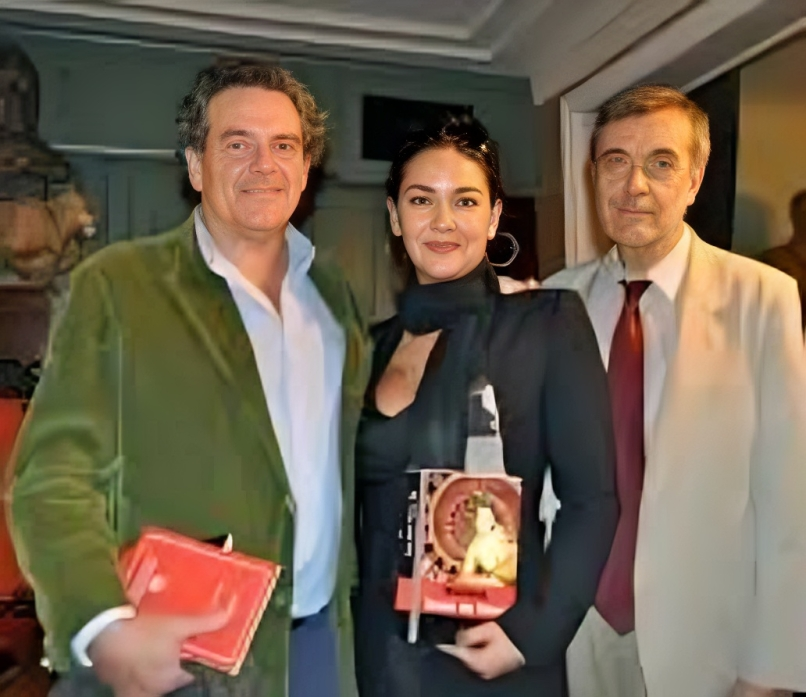
Carlos Scola Pliego is a name known by few but connected to some of the most prominent figures in the entertainment world. While not a household name in the way some filmmakers or celebrities are, his work as a filmmaker, producer, and writer leaves behind a distinct mark in the world of cinema. However, what truly brought Carlos Scola Pliego into the public spotlight was his brief but notable relationship with the iconic singer Sade Adu. Their marriage and his career in film have created an intriguing narrative about a man who preferred to remain largely out of the spotlight.
Early Life and Education
Carlos Scola Pliego was born in Spain, a country known for its rich and dynamic artistic and cinematic traditions. Though much about his early life remains relatively obscure, it is clear that Carlos was drawn to the world of filmmaking early on. His background and upbringing in Spain likely shaped his career, as the country was undergoing a cinematic renaissance during the late 1970s and early 1980s, which encouraged new generations of filmmakers to explore their creative potential.
Details about his birth date, family, and early education are not widely available, as he is a figure who has consciously kept his personal life private. While many public figures from similar backgrounds might have their biographies readily accessible, Carlos Scola Pliego has managed to maintain a relatively low profile compared to other figures in the film industry.
Career Beginnings: A Journey Behind the Camera
Carlos’s professional career began in the late 1970s, a time when Spain’s cinema industry was transitioning following the end of Francoist Spain. The country was opening up to a wider international audience, and this was reflected in the films being produced. Carlos Scola Pliego’s journey into filmmaking took root during this period of change, and it is during the early stages of his career that he honed his skills behind the camera.
His first significant role in the film industry was as a script supervisor. A script supervisor’s job is to ensure continuity in a film’s production, overseeing the smallest details from scene to scene to make sure that the film is consistent. This behind-the-scenes role was pivotal in shaping Carlos’s understanding of the filmmaking process. He worked on several projects where he could refine his craft.
Notable Early Film Projects
Carlos’s early work as a script supervisor brought him opportunities to work on high-profile films. Some of the notable productions he contributed to include:
-
La boda del señor cura (1979), a Spanish film directed by José María Forqué.
-
Opera Prima (1980), directed by Fernando Trueba, a film that marked his entry into the mainstream Spanish film industry.
By the early 1980s, he had established himself as a respected figure in the Spanish film community. As his career progressed, Carlos shifted from script supervision to more significant roles in film production, including that of assistant director.
Assistant Director Roles
Carlos’s versatility and skill in the film industry quickly propelled him to assistant director positions. In this capacity, he worked alongside some of the biggest directors of the time. His notable assistant director roles include:
-
Never Say Never Again (1983), a James Bond film starring Sean Connery. Carlos worked as a second assistant director. This film, part of the Bond franchise, was an iconic production that brought Carlos into the international film scene.
-
Curse of the Pink Panther (1983), another major production, where Carlos worked as an assistant director.
-
Christopher Columbus (1985), a historical drama miniseries in which Carlos contributed his expertise to the Spanish unit of the production.
These projects helped solidify his reputation as a skilled and reliable assistant director with an international portfolio. His work in Hollywood and international productions undoubtedly expanded his network and knowledge, preparing him for greater creative challenges.
Directorial Ventures and Creative Projects
Having gained experience and confidence in the industry, Carlos Scola Pliego eventually stepped into the role of director. He took on directorial projects that reflected his diverse interests in both narrative cinema and documentary filmmaking.
Documentary Filmmaking
Carlos ventured into documentary filmmaking with his project Ngira: Gorilas en la Montaña (1988). The documentary, which took place in the Democratic Republic of Congo, explored the lives of gorillas and their conservation. This project showcased his ability to tackle serious, real-world issues and portray them through the lens of film. Documentaries, as a format, allowed Carlos to expand his storytelling techniques while maintaining a personal connection to the subject matter.
Narrative Films
Carlos Scola Pliego also directed narrative films, including Donde termina el corazón (1989), which displayed his storytelling prowess and attention to emotional detail. This film, like many of his projects, did not make a significant impact on the international box office, but it further demonstrated his commitment to the craft of filmmaking.
As a director, Carlos’s work was more focused on artistic expression rather than commercial success. His films reflected a personal vision, though they did not achieve blockbuster status. His approach to filmmaking was one rooted in passion, and he was uninterested in adhering to the traditional commercial models that dominate the industry.
The Relationship with Sade Adu: A Union of Two Creative Souls
The turning point in Carlos Scola Pliego’s life came when he crossed paths with Sade Adu (Helen Folasade Adu), the legendary British-Nigerian singer and frontwoman of the band Sade. Known for her iconic hit songs like Smooth Operator, No Ordinary Love, and By Your Side, Sade Adu is an international music legend, and her fame soared during the late 1980s and early 1990s.
How They Met
Carlos Scola Pliego and Sade Adu first met in Spain in the mid-1980s during the production of Sade’s music videos. Carlos was part of the production team working on the music videos for Sade’s album Promise, which included the hit single Smooth Operator. During this time, a professional collaboration blossomed into a personal relationship, and the two became romantically involved.
Their relationship was kept largely private, but they were often seen together at various events and gatherings. They shared a mutual love for creativity, art, and music, and this connection allowed them to build a strong bond despite the pressures of their respective careers.
Marriage to Sade Adu
In October 1989, Carlos Scola Pliego and Sade Adu married in a private ceremony. The couple chose to marry in Spain, where they had first met and where Sade had spent considerable time recording and working on her music. The wedding was a quiet affair, with only close family and friends in attendance.
Their marriage symbolized the union of two creative souls: Sade’s artistry in music and Carlos’s passion for film. The relationship seemed to be one based on shared values, respect for one another’s work, and a commitment to privacy. Carlos, in particular, preferred to stay away from the public eye, letting his wife’s fame shine while supporting her behind the scenes.
Divorce and Later Years
Despite their apparent love and admiration for one another, the marriage between Carlos and Sade did not last. The couple divorced in 1995. The reasons behind their separation have been largely speculative, but both have remained silent about the details.
After the divorce, Carlos continued to work in film, though his career trajectory was not as high-profile as in the earlier years. He continued to explore new creative projects, but he kept a relatively low public profile. In contrast, Sade’s career continued to soar, and she became an even bigger global music icon.
Post-Marriage Life: Privacy and Legacy
Since his divorce from Sade, Carlos Scola Pliego has maintained a low profile, and little is known about his personal life. His focus seems to have remained on his creative ventures, whether in film, writing, or other artistic pursuits. He appears to have chosen a life of relative solitude, away from the spotlight, preferring to let his past work and professional contributions speak for themselves.
Carlos’s artistic legacy, though not widely known, includes his behind-the-scenes contributions to the film industry as well as his directorial work. His ability to work across different facets of filmmaking — from direction to script supervision and producing — shows his versatility as a creative force.
Conclusion
Carlos Scola Pliego may not be a household name, but his contributions to cinema and his personal connection to one of music’s biggest stars, Sade Adu, place him at a unique intersection of film and music. His work, though not always in the spotlight, speaks to a career built on dedication, passion, and a commitment to creativity. He may never have achieved the fame of Sade, but in his own right, Carlos Scola Pliego leaves behind a legacy of artistic integrity.
For those curious about the world behind the fame of the rich and the famous, Carlos’s story is a reminder that creative careers come in many forms — some leading the way, others working quietly from behind the scenes.
